

Fragrant Stock
A spring spike flower

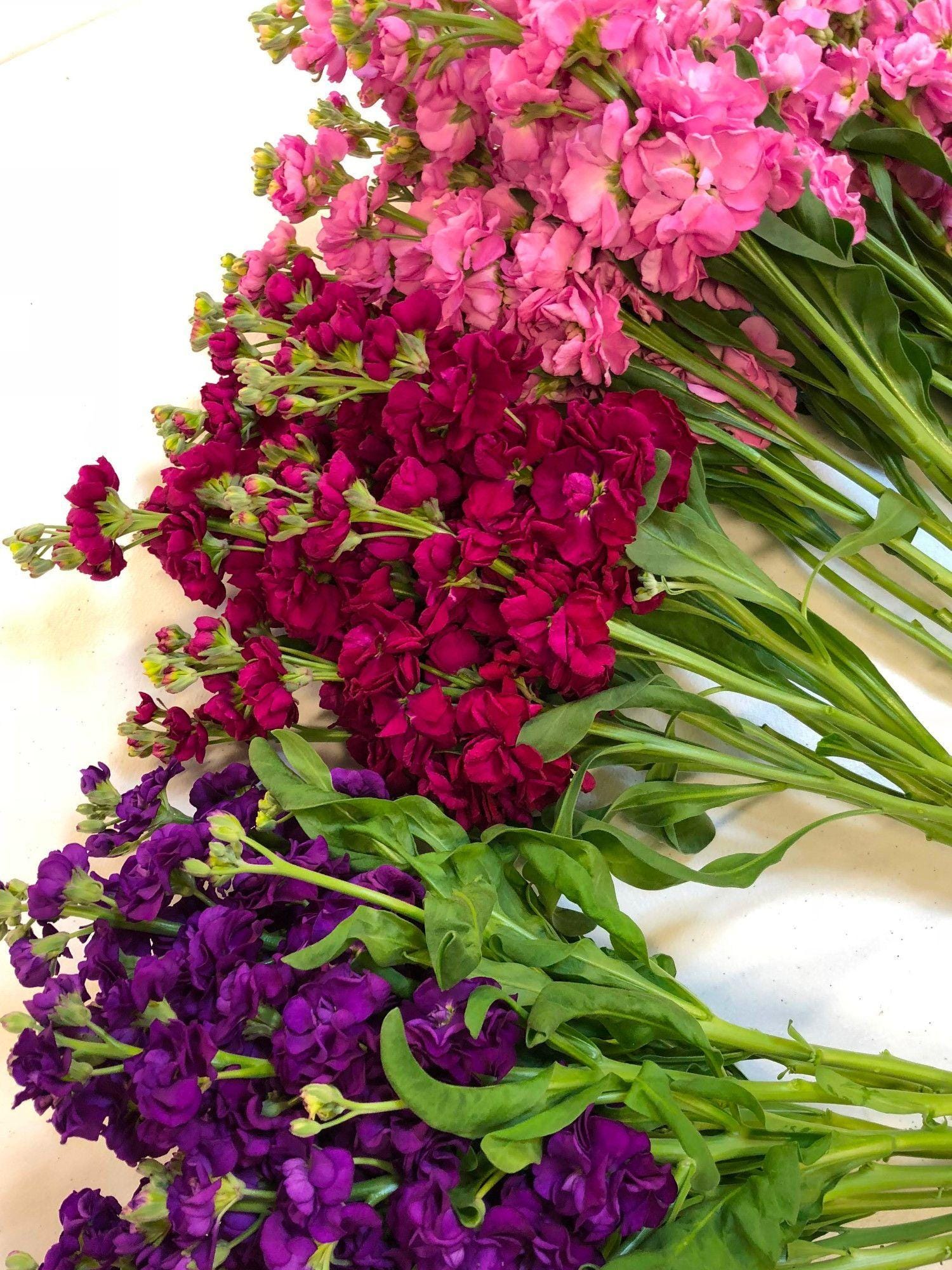
Stock is a tall spike flower with fluffy blooms that run up its stem. At their best, and when bunched together, they can be so full you can’t see individual petals. The blooms blend into each other to create a column of color. Local greenhouse-grown stock becomes available to me in the mid-Atlantic this time of year. They are perfect to use as the colorful base of an arrangement.
Stock is also a line flower - one of the six elements I always use in my arrangements. So, single stems of stock can fill that role as well in a bouquet. Its shape distinguishes it from a mass or face flower which is characterized by an unbranched stem topped by a single round bloom like sunflowers or dahlias. I demonstrated the difference in my latest YouTube video: The 6 Elements of Floral Design: Line Flowers Explained.
They are sometimes confused with another line flower, snapdragon. Both plants bloom around the same time, and they have the same general size and shape But, the buds are nothing alike. Snapdragons have tubular, rigid blooms while stock’s flowers are layered, soft and billowy.
Though they are both line flowers, snaps and stock can have different purposes in design. I will use snaps as a natural pointer to draw attention to a focal flower or to extend out of an arrangement for height. Stock does double duty. They can be a classic line flower or a filler, another my other six elements. Cut short, their blooms can provide that cloud of color for other stems to rest against and fill in the background of a bouquet. They are less pointy than snaps but can still guide the eye to the hero blooms when strategically placed as individual stems.
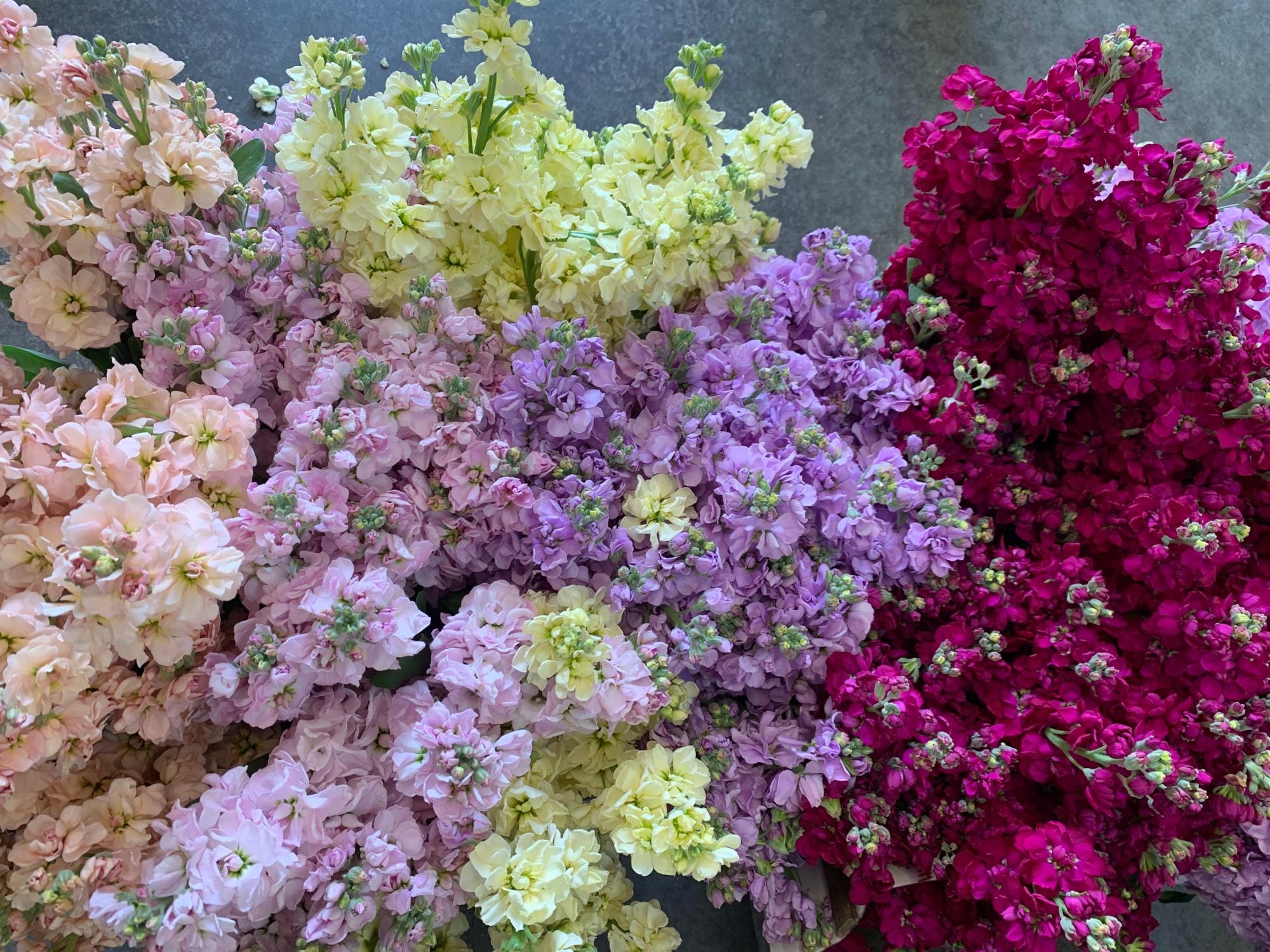
Stock stands out for its fragrance. Similar to a carnation, it has a sweet and spicy scent. The water in a bucket of stock over time, on the other hand, can smell like it was used to boil cabbage. The flower itself, past its prime, can take on that odor as well. Its botanical name is matthiola, and it’s a member of the Brassicaceae family which mostly includes vegetables such as cabbage, arugula, radishes and Brussel sprouts. Unsurprisingly, this plant is edible. The flowers and seed pods can add a mildly spicy flavor to salads. They can also be candied. Yum?
Stock is grown to produce double blooms but many stems in a crop can only manage single blooms. I really don’t have a use for singles. They just don’t have the same fluffy quality as the doubles. Singles are underwhelming. They look malnourished.
On Floret’s website, Erin Benzakein says of her apricot stock seeds: “Half of the plants will be single flowered, the other half double, so plant twice as many as you need.” A packet of 50 seeds only costs about $6, so why not? Most of my growers will separate the singles from the doubles and sell them at a reduced price. I’ll pass. When it comes to stock, make mine doubles.