


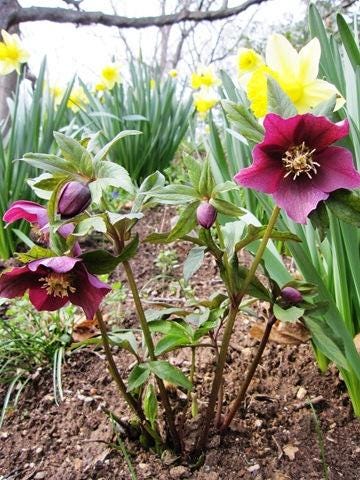
I would usually be emerging from winter goblin mode by now and getting outside in the morning for some walks (and even a run on occasion), but it is still too cold and icy to venture into nature. The snowcrete has replaced the droopy drama from the hellebores normally blooming in my neighborhood contributing to my grumpy mood. If those frowning flowers ever arrive in my shop, I’d be happy to have them but there would still be some issues. Don’t get me wrong - I love their look. It’s mostly their posture that gets me down. File our relationship status under “it’s complicated.”
Hellebores are supposedly easy to grow. Although my neighbors don’t seem to have any problems, I have had zero luck with these flowers. I want to grow them. I’d love to be able to cut them from my own garden to sell in my shop. The problem is my soil. My yard is filled with heavy clay and is rock hard, so it doesn’t drain well. I have been trying to amend the soil over the last few years - it’s slow going. I can get daffodils and tulips to grow, but not hellebores. While they are hard to come by at home, it’s easy to order them for my shop. Most of my farmers offer them.
I’ll just say it. Hellebores are weirdos. They don’t really fit in as a spring flower. The colors are all muted. Rather than bright and colorful like most other blooms right now, these flowers are deep purple, pale green, speckled white, cream and pearly pink. They have a moody quality. Most of my customers aren’t looking for that now. They want Lilly Pulitzer, not Wednesday Addams. Maybe I’m being a little harsh. I don’t have a lot of local flowers to work with currently. It takes more skill and creativity to pair these blooms with my cheerful daffodils, tulips and ranunculus which dominate my designs in March and April.
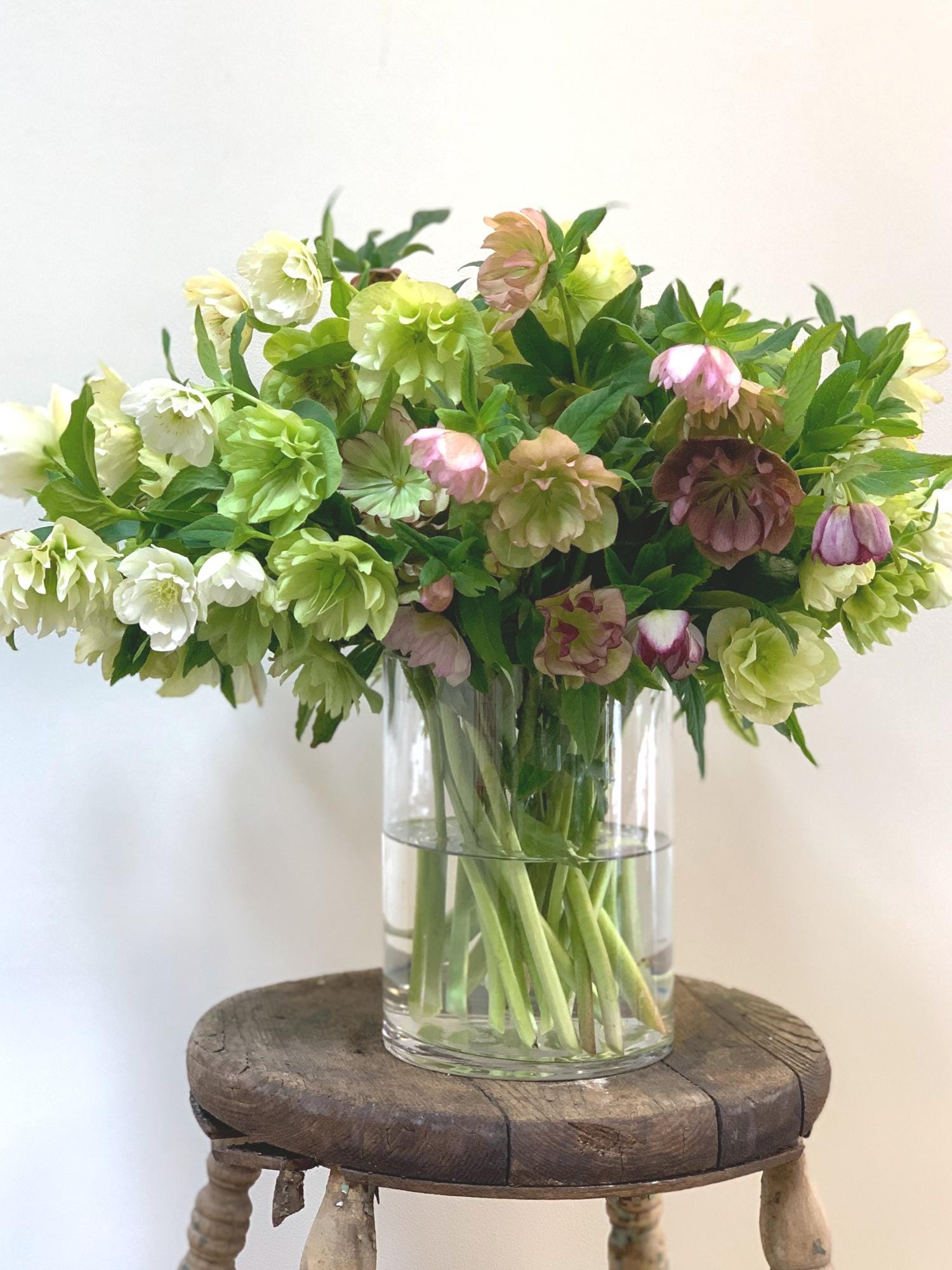
You’ve got to admit, the appearance is a little depressed. They’re slouchy. Old varieties of garden hellebores, helleborus Orientalis, have heads that face the ground. Unless they are propped up or wired, you will be seeing the back of the bloom instead of its open face. New varieties are being bred to have heads facing upwards. The new breeds also have more colors and ruffly sepals (the outer part of the flower) resulting in double, fluffy blooms.
The natural droopy characteristic of hellebores can be mistaken for wilt - a misplaced complaint I often receive from customers. Actual wilt is a common problem with this plant if it is not harvested properly. A hellebore is ready to cut if its center stamens have fallen off and have been replaced with a seed pod. The sepals in the seed pod stage will also have a plasticity to the touch.
It can get tricky to decide to take a hellebore if a stem has multiple blooms in different stages. Growers need to find the sweet-spot. It’s best to wait until at least two of the blooms on a stem have seed pods. If you cut earlier, the plant will definitely wilt. If you wait too long, there is risk of bruising and browning with a short vase life.
There’s a way to assist hellebore hydration to prevent wilting. Slice a shallow cut up the length of the stem with a sharp, clean knife. That will give the flower a little more pep. Despite taking a blade to each of them, I really do like these flowers. They remind me of Eeyore - one my favorite childhood characters from Winnie the Pooh - downtrodden but lovable. Hellebores would be a better fall flower. Oh, bother.
I have hellebore inspiration for you! New to Substack. Not sure how to send a picture. 😄
I am glad to know the slicing trick works! I have always done it, but I was never confident that it actually does anything. 😂