

Killer Plants
Inside the creepy world of carnivorous plants.

Carnivorous plants are about as spooky as you can get in the horticultural world. My imagination ran wild about them back when I was a trick-or-treater. I conjured images of hungry and animated plants like Cleopatra in The Addams Family. Or, I thought of huge aggressive people-eating plants like Audrey II from The Little Shop of Horrors.
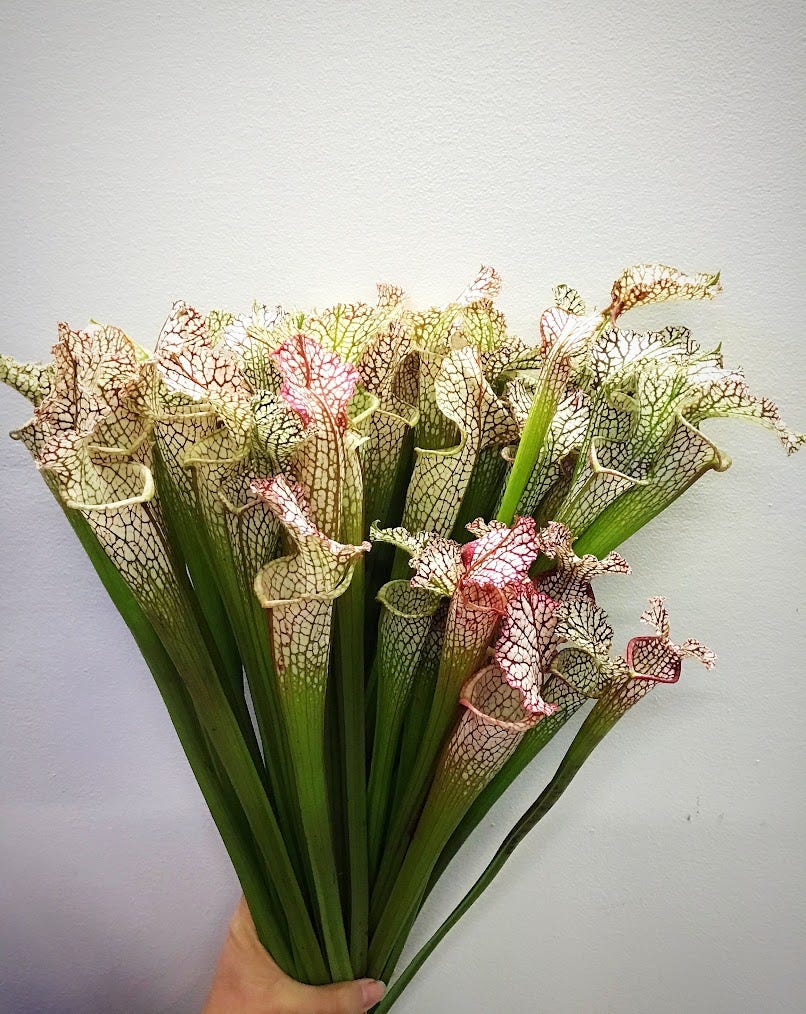
It wasn’t until I was a little older, and not even very plant-savvy, that I figured out carnivorous plants weren’t really that sinister. When I became a florist I discovered how interesting and design-worthy some carnivorous plants are. Most are tropical so I don’t usually get them at my local-only shop. There is one, however, I order every year - Sarracenia leucophylla, a species of the pitcher plant. It is special for its nutritional intake and unique stalk-like appearance.
Carnivorous plants get their nutrients from trapping and digesting other organisms as opposed to photosynthesis like most flora. Typically these plants devour insects, but there are some species that “eat” small mammals and birds. Carnivorous plants have various methods to lure and capture their prey. The International Carnivorous Plant Society identifies several mechanisms this hungry horticulture uses to trap food.
Pitcher plants use the pitfall trap to capture its meals. They are tubular shaped and secrete enticing nectar at their opening. Greedy insects attracted to the treat venture inside for more. Once in the tube, they’re trapped by waxy crystals and cilia on the inner walls of the plant. At the bottom is a pool of digestive goo that breaks down the trapped insect. It could be the plot of an Edgar Allen Poe story.
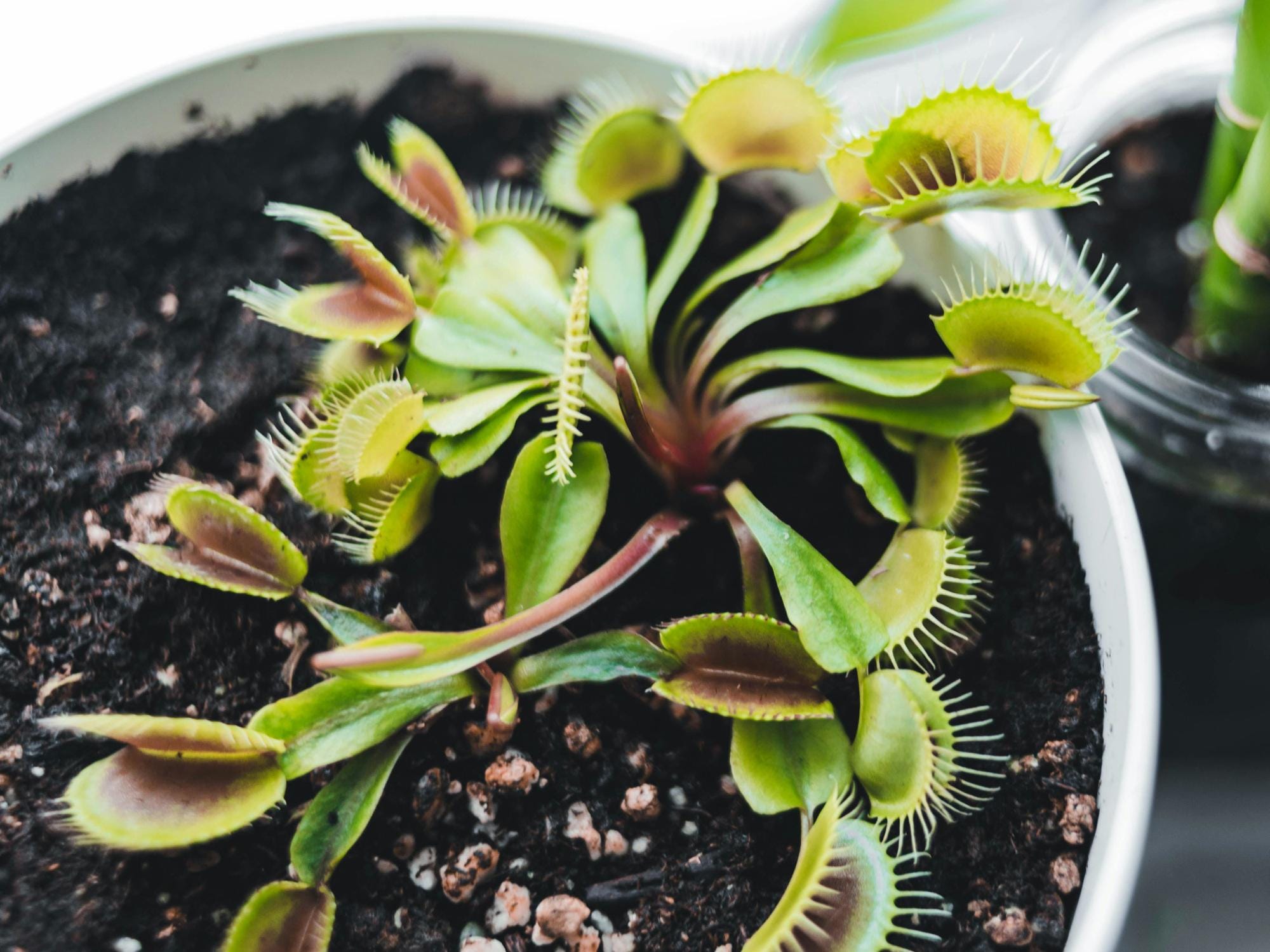
There is no Grubhub for the Venus Fly Trap. Their scary snapping trap is probably what comes to mind when thinking of carnivorous plants. It attracts dinner with bright red leaves sprouting tiny hairs called trichomes. When touched, the trichomes trigger the plant to snap its leaves shut, like a giant mouth, trapping the prey. The plant then secrets enzymes to digest its prisoner. Feed Me, Seymore!
Butterworts use an adhesive trap like fly paper to capture prey. Also known as pings from their botanical name Pinguicula meaning “little greasy one” these plants are covered in a sticky mucilage. Any insect that lands on the succulent-like leaves get stuck. They are then digested slowly by acids from the inside out. The bugs’ exoskeletons are the only crumbs left. It’s simple, effective and gruesome. I can hear Vincent Price laughing.
Suction traps, used by bladderworts, are the most sophisticated and powerful of the traps. The plant uses a tiny submerged bladder with a trap door. The pressure release of the bladder violently sucks a snack in when prey, such as mosquito larvae or baby tadpoles (yum), disturb a hair trigger on the door. Swoosh!
Download my printable zine about carnivorous plants for a fun Halloween project.
Love, love Sarrencenias!!