

Lupine
I'm hungry like the wolf!

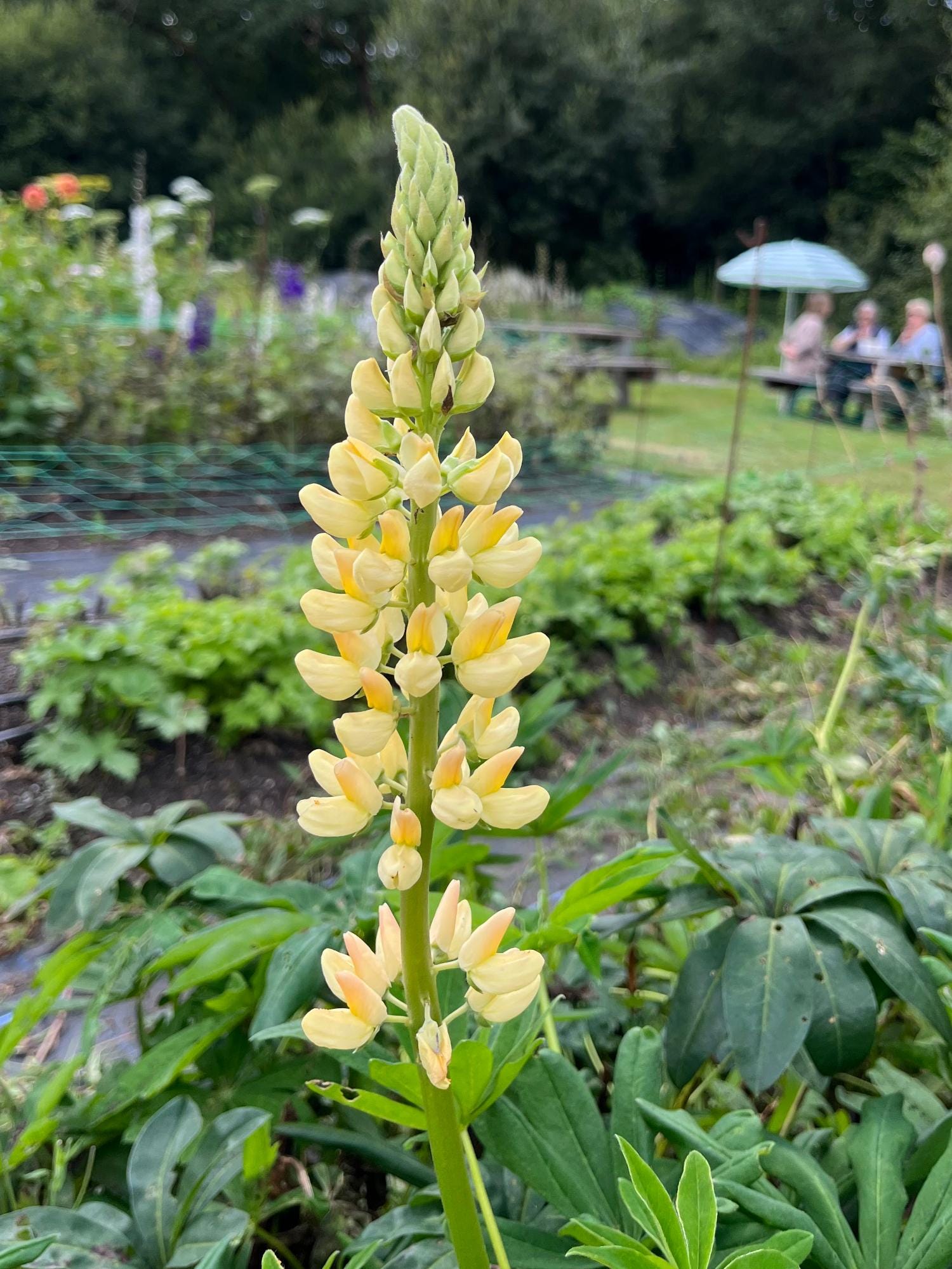
Allan Armitage, in his book Herbaceous Perennial Plants wrote: “Flowers any more perfect as those of the lupine hybrids are difficult to imagine.” That perfection, and their local elusiveness, is why lupine makes me hungry like the wolf.
There are two version of where lupine gets its name. Both derive from the Latin word lupus meaning wolf. The plant has a reputation of wolfing nutrients from the soil and taking up space preventing other flowers from growing around it. While this isn’t true, farmers in my region have been reluctant to grow it for sale because of the costly greenhouse space it requires year round as a perennial. The more accepted story behind the name is the alkaloid poison lupine contains. Ranchers say the flower is as deadly to their livestock as a pack of wolves.
Long before I became a florist, I worked part-time at a vegetable and flower farm. I weeded, planted and watered. There was some selling too. One of the plants I sold were baby lupine starters. They were just tiny, nascent green sprigs sprouting out of flimsy black planters. Nothing about them seemed special, let alone perfect. However, the enticing picture of rows of mature lupine on the white plastic label that I skewered into the dark soil promised a beauty only poets, painters and Allan Armitage could imagine. I never saw any of those starts bloom, but I fantasized.
It would be years before I attempted to possess lupine for myself. As an established florist, I taught a class with Mimo Davis of Urban Buds in St. Louis. She talked about having success growing lupine in the greenhouse. Just as a risen full moon rouses the wolves, my lupine lust was rekindled. St. Louis is a half country away from my shop but we’re in the same growing zone - 7a. Local lupine could be mine if grown under cover. I was on the hunt.
My former lead designer, Jess, now grows at her own cut flower garden - Bloomhouse. She planted a single lupine plant two years ago in the field. It produced a few blooms. She brought me one last spring. The single stem piqued my unfulfilled desire. I displayed this prized stem at shop during my weekly Saturday morning drop-in. Customers gasped when they saw it. Some asked if they could buy my lupine. Every inquiry instinctively raised my dander. I bared my teeth and snarled a response. It was not for sale.
Another flower friend, Rebecca from Moonshot Farm in New Jersey, grows lupine by the buckets for her customers in NYC. She’s also in zone 7a and keeps her lupine covered, but she has a trick. Rebecca grows it like a hardy annual in an unheated tunnel. After the lupine blooms, she digs them up to use that space for other flowers for the summer and fall. I was salivating. Lupine was close enough to smell on the wind, but too far away for me to buy.
Dani of Winter’s Farm Florals, one of my regular suppliers, has also been tempted by lure of lupine, but she did not want to give up greenhouse space. When I told her how Moonshot grows lupine, something innate triggered in Dani. The Moonshot method changed her mind. She started growing lupine as an annual last year. Dani delivered the first two stems to me last week.
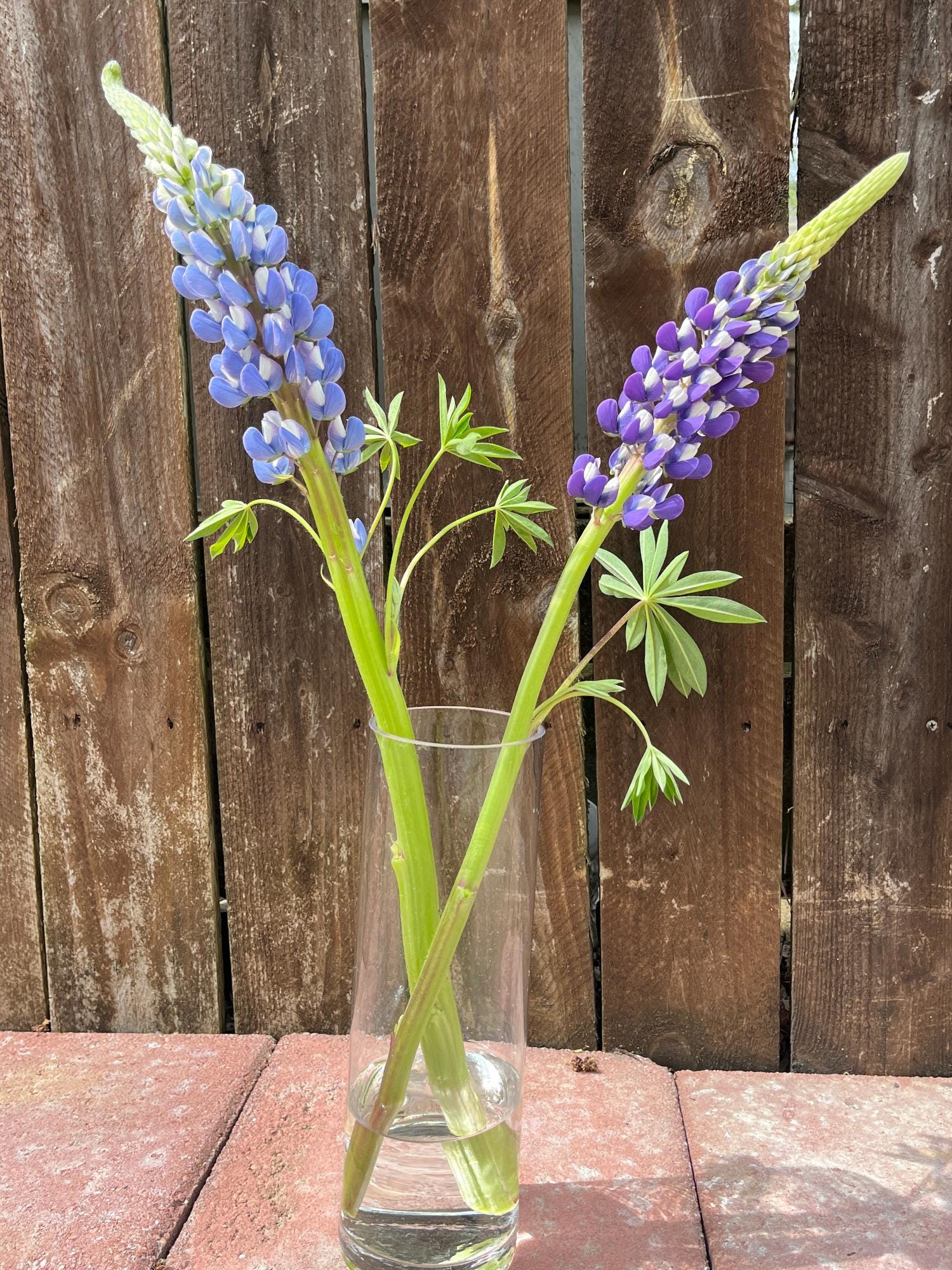
I’m now putting them to the test. These two stems are in a vase on my desk with no water changes. (My covetous customers will never see them.) The Seattle Wholesale Growers Market Floral Standards book says the proper harvest stage is when 1–4 rows of flowers have opened on the spike. I can then expect 5-6 days of vase life. So far, so good.
Lupine is both geotropic and phototropic, meaning the stems respond to gravity by curving upward and will also bend toward a light source, so I’ll be watching for that too. Next, when Dani delivers more, I’ll test how they work in designs, whether they dry well, how they handle being out of water and how long I can hold them in the cooler and still use them for an event.
The bunches of lupine I desire remain elusive at my shop for now, but I’ve closed the distance in my chase. Is it the bloom or the hunt that brings out the wolf in me? Either way, my hunger for lupine is insatiable.